
Category: Blog

Your blog category

  • How to Finance a Luxury Villa in Spain: Mortgages, Income Requirements & Wealth Tax Guide

    How to Finance a Luxury Villa in Spain: Mortgages, Income Requirements & Wealth Tax Guide

    For many international buyers, buying a luxury villa in Spain, especially in areas such as Marbella, Benahavís, Sotogrande and the Costa del Sol, is a dream.

    Once they have found the right property, however, the next question usually becomes:

    ‘How does financing work in Spain?’

    The good news is that Spanish banks continue to finance international buyers, particularly those with a strong income, substantial assets and a clean financial history.

    In this guide, we explain how financing luxury villas works in Spain, what banks look for, the typical conditions of mortgages and what buyers should know about wealth tax for high-value assets.

    Can Foreigners Get a Mortgage in Spain?

    Yes.

    Non-residents can obtain mortgages from Spanish banks relatively smoothly, especially for luxury properties.

    Most international buyers currently finance between:

    • 60%–70% of the property value
    • Sometimes more depending on profile and residency status

    Spanish banks today are significantly stricter than before 2008, which actually creates a healthier and safer lending environment.

    Banks carefully evaluate:

    • Income stability
    • Existing debts
    • Business ownership
    • Tax returns
    • Savings and assets
    • Credit profile
    • Nationality and country risk

    For high-net-worth buyers, private banking divisions often provide more flexible solutions.


    How Much Deposit Do You Need?

    For most luxury villa purchases in Spain, buyers should prepare for:

    • Around 30%–40% as down payment
    • Additional purchase costs and taxes

    Purchase costs for luxury properties can become significant, especially for higher-priced villas.

    Typical additional costs include:

    • Transfer tax or VAT
    • Notary fees
    • Registry fees
    • Legal fees
    • Mortgage setup costs
    • Stamp duty (AJD) for new builds

    Many buyers underestimate these additional expenses during the planning phase.


    What Income Do Spanish Banks Require?

    Spanish banks want to see clear financial capacity and stable income.

    Financial documents and income verification setup for obtaining a Spanish mortgage for a luxury villa
    Spanish banks review income stability, assets, savings and financial documentation carefully when financing luxury villas for international buyers.

    In general, banks prefer that total debt obligations remain within reasonable affordability ratios.

    For luxury buyers, banks commonly review:

    • Salary income
    • Dividends
    • Company ownership
    • Rental income
    • Investment income
    • Existing property portfolio
    • Global net worth

    Self-employed buyers and entrepreneurs can absolutely obtain financing, but documentation is usually more extensive.

    Commonly requested documents include:

    • Tax returns
    • Bank statements
    • Payslips
    • Company accounts
    • Asset statements
    • Existing mortgage obligations

    International buyers with transparent finances and strong liquidity usually receive the best conditions.


    Financing a New Build Luxury Villa

    New developments and off-plan villas have become extremely popular across the Costa del Sol.

    Many luxury buyers prefer modern villas because of:

    • Better energy efficiency
    • Smart home technology
    • Lower maintenance costs
    • Modern architecture
    • Wellness amenities
    • Higher long-term attractiveness

    In many cases, buyers finance the final mortgage only at completion while making staged payments during construction.

    Typical payment structures may include:

    • Reservation deposit
    • Initial contract payment
    • Construction stage payments
    • Final payment at title deed signing

    Banks often issue final mortgage approval closer to delivery.


    What About Wealth Tax in Spain?

    This is one of the most important topics for high-net-worth buyers.

    Spain applies Wealth Tax on worldwide assets for tax residents and on Spanish-based assets for non-residents.

    For many international luxury buyers, this becomes relevant when total taxable assets become substantial.

    In Andalusia, there are currently important regional property tax advantages compared to some other Spanish regions, especially for high-net-worth individuals.

    However, buyers purchasing luxury villas above several million euros should always analyze:

    • Global asset structure
    • Residency plans
    • Company ownership
    • International tax exposure
    • Double taxation agreements

    For ultra-high-net-worth buyers with assets above approximately €3 million, professional tax planning becomes essential before purchasing.

    This is particularly important for buyers considering:

    • Permanent relocation to Spain
    • Becoming Spanish tax residents
    • Large international investment portfolios
    • Multiple properties worldwide

    A properly structured purchase can create significant long-term advantages.


    Is Buying a Luxury Villa in Spain Still a Good Investment?

    The Costa del Sol luxury market continues showing strong international demand.

    Compared to many other prime global destinations, buyers still see value in Spain because of:

    • Climate and lifestyle
    • International connectivity
    • Strong expat infrastructure
    • Limited prime land supply
    • Growing luxury demand
    • Modern new developments
    • Attractive long-term lifestyle investment

    At the same time, supply remains relatively limited in the most desirable areas.

    This is one reason why many luxury villas continue appreciating strongly, especially modern homes in prime locations.


    Final Thoughts

    Financing a luxury villa in Spain today is very achievable for international buyers with stable income, assets and proper preparation.

    Spanish banks remain active in the luxury segment, but buyers should understand the full picture beyond the mortgage itself — including taxes, liquidity, purchase costs and long-term wealth planning.

    For buyers purchasing high-value properties, professional guidance becomes extremely important from the very beginning.

    Understanding financing structures, tax exposure and ownership strategy before signing a reservation contract can save significant time, money and stress later in the process.

  • Luxury Villas in Spain: Marbella, Ibiza & Prime Locations

    Luxury Villas in Spain: Marbella, Ibiza & Prime Locations

    Spain has quietly become one of Europe’s most competitive luxury real estate markets. This is not just because of the weather or lifestyle, but rather due to a more structural factor: a limited supply of prime villas combined with consistent international demand.

    After years of observing the evolution of the market on the Costa del Sol and across Spain, one thing stands out: luxury villas don’t follow the same rules as the rest of the market. They are less sensitive to short-term fluctuations and are instead driven by location, scarcity, and buyer profile.

    This guide breaks down what defines a luxury villa in Spain, where to find the best ones, and how key markets compare.

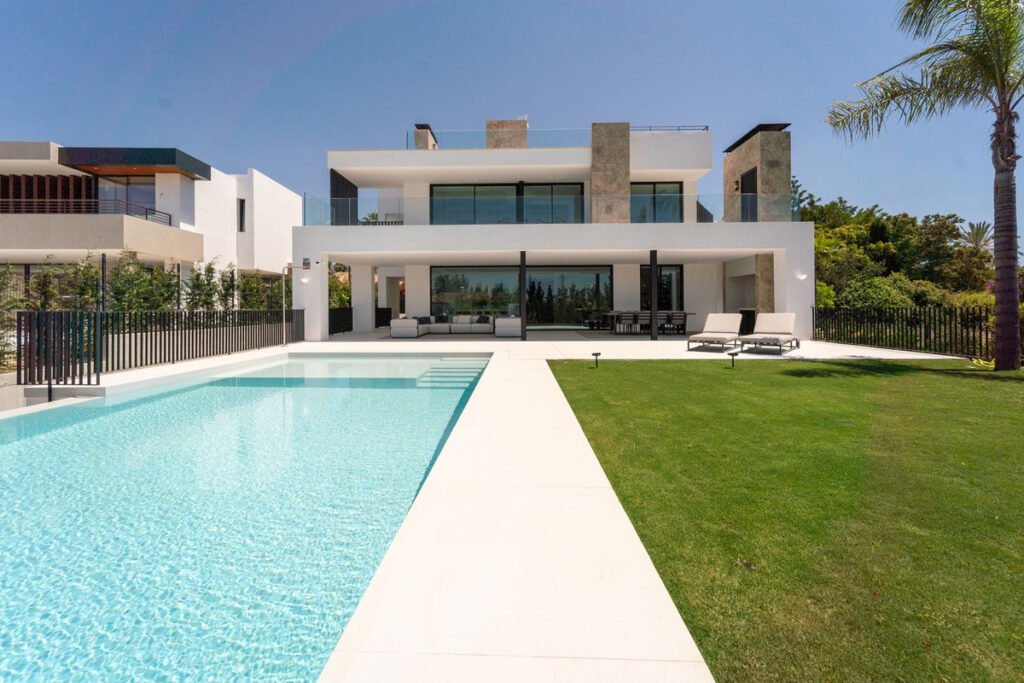
    Modern luxury villa in Spain with private pool and contemporary design on the Costa del Sol

    What Defines a Luxury Villa in Spain?

    The term “luxury” is often overused, especially in property listings. In reality, only a small percentage of villas truly meet the criteria.

    From what we consistently see in the market, a luxury villa in Spain is defined by a combination of:

    Key Characteristics

    • Prime location
      Coastal areas, gated communities, or elevated plots with views
    • Sea views or open panoramic views
      This alone can significantly increase value
    • High-quality construction and design
      Modern architecture, large glass surfaces, energy efficiency
    • Privacy and plot size
      Larger plots are becoming increasingly scarce
    • Amenities
      Infinity pools, home automation, wellness areas, security systems

    Market Reality

    A villa is rarely considered “luxury” below:

    • €1.5M on the Costa del Sol
    • €2M+ in Marbella prime areas
    • €3M+ in Ibiza or Mallorca prime zones

    This aligns with listing data from Idealista, where high-end coastal properties significantly exceed national averages.

    Modern luxury villa in Spain with private pool, garden and contemporary architecture
    Contemporary villa in Spain featuring private swimming pool, landscaped garden and minimalist architecture

    Top Luxury Villa Areas in Spain

    Spain has several luxury hotspots, but they differ quite a lot depending on lifestyle, buyer profile, and investment potential.

    Marbella & Benahavís (Costa del Sol)

    This is currently one of the strongest luxury villa markets in Europe.

    What stands out:

    • Year-round demand (not just seasonal)
    • Strong international buyer base
    • High concentration of modern villas
    • Established luxury infrastructure

    In areas like the Golden Mile, Nueva Andalucía, and La Zagaleta, villas can easily range from €2M to €15M+.


    Ibiza

    Ibiza is a different type of luxury market.

    Key characteristics:

    • Limited land availability
    • Strict building regulations
    • Strong lifestyle appeal

    Luxury villas here are often priced from €2.5M to €10M+, especially for sea-view properties.


    Mallorca

    Mallorca offers a slightly more balanced luxury market.

    Prices typically start around €1.5M – €2M for premium villas.


    Practical Observation

    Over time, the Costa del Sol — especially Marbella — has evolved into the most liquid luxury market, meaning:

    • More transactions
    • More buyers
    • Easier resale compared to island markets

    Marbella vs Ibiza: Luxury Market Comparison

    This is one of the most common comparisons buyers make.


    Marbella

    Modern luxury villa interior in Spain with open plan living room, dining area and garden view
    Contemporary villa interior in Spain with open-plan layout, natural light and direct access to outdoor living space
    • Larger market
    • More new developments
    • Better rental infrastructure
    • Easier access (Málaga Airport)

    Passenger data from Aena confirms over 26 million passengers annually, supporting consistent demand.
    https://www.aena.es/


    Ibiza

    • More exclusive, but smaller market
    • Limited supply
    • Strong seasonal demand
    • Higher volatility depending on tourism cycles

    Key Difference

    • Marbella → balanced luxury + investment market
    • Ibiza → lifestyle-driven, scarcity-based market

    Where Are the Most Expensive Villas in Spain?

    Palace of Almudaina Mallorca Spain with palm trees and historic stone architecture
    Palace of Almudaina in Mallorca with palm trees and historic architecture

    The highest-priced villas are typically found in:

    • Marbella (La Zagaleta, Golden Mile)
    • Ibiza (Es Cubells, Cala Jondal)
    • Mallorca (Son Vida, Port d’Andratx)

    These properties often exceed €10M+, with some reaching €20M+ depending on location and exclusivity.


    What Makes Luxury Villas Hold Their Value?

    From long-term observation, three factors consistently protect value:


    1. Micro-location

    Not just the city, but:

    • Specific urbanisation
    • Distance to amenities
    • Views and orientation

    2. Scarcity

    There are fewer:

    • Large plots
    • Frontline properties
    • Elevated sea-view villas

    This drives long-term appreciation.


    3. Buyer Profile

    Luxury buyers are less affected by:

    • Interest rates
    • Short-term economic changes

    This keeps demand relatively stable.

    FAQ’s

    What is considered a luxury villa in Spain?

    Where are the most expensive villas in Spain?

    The highest prices are found in Marbella, Ibiza, and Mallorca, particularly in exclusive areas like La Zagaleta, Golden Mile, and Port d’Andratx.

    Final Thoughts

    Luxury villas in Spain are about more than just size and design. What truly defines them is their location, scarcity, and long-term demand.

    After years of observing how different areas perform, one consistent pattern emerges:

    The most valuable villas are not necessarily the most expensive; they are the ones in the right place with the right positioning and long-term appeal.

  • Best Places to Buy a Villa in Spain (Costa del Sol, Mallorca, Ibiza)

    Best Places to Buy a Villa in Spain (Costa del Sol, Mallorca, Ibiza)

    Deciding where to buy a villa in Spain is often more important than the property itself.

    After years of observing how different areas perform, one clear pattern emerges: location determines lifestyle and long-term value far more than villa design or size.

    Spain has several strong villa markets, but they differ significantly depending on:

    – Buyer profile

    – Rental demand

    – Price growth

    – Accessibility

    This guide breaks down the most relevant areas and what you can realistically expect from each.

    Costa del Sol (Southern Spain Villas)

    The Costa del Sol remains one of the most active markets for villas in Spain, especially among international buyers.

    Modern luxury villa with pool in Marbella Costa del Sol Spain
    Modern villa in Marbella with private pool and landscaped garden on the Costa del Sol

    The region offers:

    strong infrastructure, year-round demand, and a wide price range.

    According to Idealista, Málaga province has seen consistent price growth in recent years (From March 2025 until today, it has increased by 13.6%.), driven by limited supply and growing foreign interest.

    Marbella, Estepona and Mijas Compared

    Marbella

    • Established luxury market
    • High international demand
    • Limited supply in prime areas

    Typical villa prices:

    • From €1M to €10M+

    Marbella tends to be the most liquid market, meaning:

    • Easier resale
    • Strong rental potential

    Estepona

    • Growing fast in the last 5–7 years
    • Better value compared to Marbella
    • Strong infrastructure improvements

    Typical villa prices:

    • €600K – €1.5M

    Estepona offers a balance between lifestyle and long-term growth.


    Mijas

    • More affordable entry point
    • Mix of traditional and modern villas
    • Popular with families and long-term residents

    Typical villa prices:

    • €500K – €1M

    Practical Insight

    From what we consistently see:


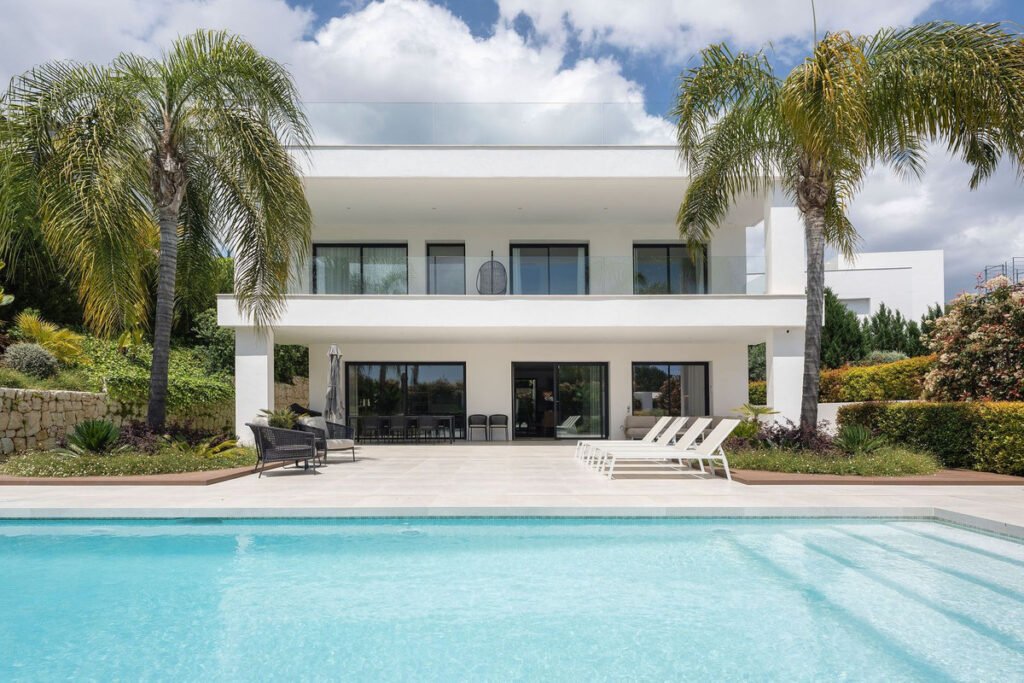
    Contemporary villa with pool and palm trees in Costa del Sol Spain
    Elegant modern villa with swimming pool and palm trees in Costa del Sol

    Mallorca (Villas in Mallorca Spain)

    Mallorca is one of Spain’s most established luxury destinations.

    What makes it different:

    • Strong Northern European demand
    • High-quality construction
    • Strict building regulations (limited supply)

    Key Areas

    • Son Vida (Palma) → luxury villas with views
    • Port d’Andratx → high-end coastal properties
    • Santa Ponsa → family-friendly villas

    Typical villa prices:

    • From €1.5M to €8M+

    Market Character

    Mallorca is more:

    • Stable
    • Lifestyle-driven
    • Less volatile than smaller island markets

    Ibiza

    Ibiza is one of the most exclusive villa markets in Spain.


    What Makes It Unique

    • Limited buildable land
    • Strong global demand
    • High privacy value

    Typical villa prices:

    • From €2M to €10M+

    Important Reality

    Ibiza is more seasonal than mainland markets.

    • Strong summer demand
    • Less year-round activity

    This affects rental patterns and liquidity.


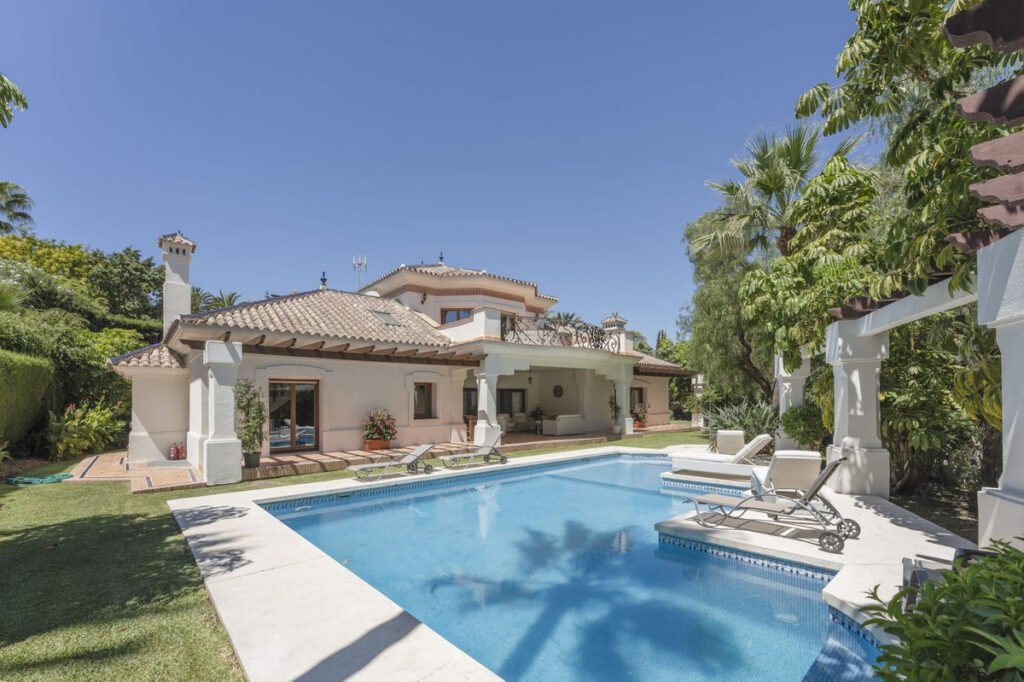
    Luxury villa with private pool and garden Costa del Sol Spain
    Private villa with pool and garden in a quiet residential area on the Costa del Sol

    Andalusia vs Mallorca

    This is a common decision for buyers.


    Andalusia (Costa del Sol)

    • Easier access (Málaga Airport)
    • Year-round demand

    Passenger data from Aena shows over 26 million passengers annually through Málaga Airport.
    https://www.aena.es/

    • More inventory
    • Better rental flexibility

    Mallorca

    • More exclusive feel
    • Less construction
    • Higher entry prices

    Summary

    • Andalusia → more dynamic and accessible
    • Mallorca → more limited and premium

    Hidden Gems in Spain

    Beyond the main hotspots, several areas are gaining attention.


    Casares & Manilva (Costa del Sol)

    • Lower entry prices
    • Increasing demand
    • Good long-term potential

    Alicante Region

    • Strong value for money
    • Growing international demand

    Northern Spain

    • Less saturated markets
    • Different climate and buyer profile

    Practical Insight

    These areas often offer:

    • Better price per m²
    • Lower competition
    • Higher long-term upside

    But:

    • Slower resale
    • Less rental demand initially
    Luxury villa with private pool and garden Costa del Sol Spain
    Private villa with pool and garden in a quiet residential area on the Costa del Sol

    FAQ’s

    Which area is best for investment?

    The Costa del Sol currently offers one of the strongest combinations of:

    – Demand
    – Rental potential
    – Price growth

    Within it:
    – Marbella → stability
    – Estepona → growth
    – Mijas → value

    Where is cheapest to buy villas in Spain?

    The most affordable villas are typically found in:

    – In Murcia
    – Inland Andalusia
    – Casares and Manilva
    – Parts of Alicante

    Prices can start from €400K – €500K, depending on condition and location.

  • Villas for Sale in Spain: Prices, Locations & Buying Guide (2026)

    Villas for Sale in Spain: Prices, Locations & Buying Guide (2026)

    Spain remains one of the most attractive destinations in Europe for property buyers seeking a desirable lifestyle, stability, and long-term investment potential.

    The market offers a wide range of opportunities for international buyers, from luxury villas overlooking the Mediterranean to more affordable homes in emerging areas.

    In this guide, you’ll learn:

    • How much villas cost in Spain
    • Where to buy depending on your goals
    • Whether foreigners can legally purchase property

    How Much Does a Villa Cost in Spain?

    Villa prices in Spain vary widely depending on location, proximity to the coast, views, and build quality.

    Detached villa in Sotogrande with private pool and garden on the Costa del Sol Spain
    Spacious villa in Sotogrande featuring a private pool, landscaped garden, and outdoor living areas typical of Costa del Sol properties: https://costaprimerealty.com

    According to recent data from Idealista, the average property price in Spain reached around €2,673/m² in early 2026, with significantly higher prices in coastal hotspots.

    However, prices in Marbella can easily reach 10,000 euros per square meter.

    So, there is no one-size-fits-all solution. Inland is cheaper, while the coast is expensive. The most wanted villas are on the first, second, and third lines, which often price them in the 10M+ euro range here in Marbella.

    Typical Villa Price Ranges

    Based on current listings and transaction data:

    • Entry-level villas: €400,000 – €700,000
    • Mid-range villas: €700,000 – €1.5M
    • Luxury villas: €1.5M – €10M+

    What We See in Reality

    Based on my experience in the market:

    Anything below €500,000 is usually:

    – Inland

    – Older

    – Requires renovation

    The €700,000–€1.2M range is where most international buyers operate.

    Prime villas (Marbella and Benahavís):

    They often start closer to €1.5 million and go well beyond €5 million for top locations.

    Detached villa in Benalmadena with sea views on the Costa del Sol Spain
    Hillside villa in Benalmadena offering sea views, privacy and Mediterranean surroundings on the Costa del Sol

    Additional Buying Costs

    In addition to the purchase price, buyers should expect the following:

    Resale properties: ~9–10% extra

    New builds: ~12–14% extra.

    These include:

    – Transfer tax (ITP) or VAT

    – Notary and registry fees

    – Legal costs

    Official reference:

    Agencia Tributaria

    Where to Buy a Villa in Spain?

    This is where most buyers either make a strong investment or a costly mistake.

    The best location depends on your goal:

    • Lifestyle
    • Rental income
    • Long-term appreciation

    Costa del Sol (Most Balanced Market)

    From what we’ve seen over the years, the Costa del Sol offers one of the most balanced combinations of:

    • Accessibility
    • International demand
    • Rental potential

    Key data point:
    Aena reports over 26 million passengers annually through Málaga Airport.

    That level of traffic directly supports property demand.

    Key Areas on The Costa del Sol

    Marbella / Benahavís

    • High-end villas
    • Strong international demand
    • Limited supply

    Estepona / Mijas

    • Better value per m²
    • Strong growth in recent years
    • Popular with families

    Manilva / Casares

    • Increasing interest from investors
    • Lower entry prices

    FAQ’s

    Can Foreigners Buy Villas in Spain?

    Yes, and this is one of Spain’s biggest advantages.
    There are no restrictions on foreign ownership.

    What do I need to buy a villa in Spain?

    The process is straightforward:

    1. NIE number (tax identification)
    2. Spanish bank account
    3. Reservation deposit
    4. Proof of funds
    5. Funds

    Is Buying a Villa in Spain a Good Investment?

    Yes — but only if the property is well chosen.

    On the Costa del Sol, the best-performing villas typically have:

    Prime locations (Marbella, Benahavís, Estepona)
    Sea views or good orientation

    Modern condition or clear renovation potential
    Strong rental appeal

    Average returns can reach 5–7% for short-term rentals, but results depend heavily on location and property quality.
    In practice, location matters more than the villa itself.

    Where is the best place to buy a villa in Spain?

    The Costa del Sol offers one of the best combinations of lifestyle, demand, and investment potential.

  • Is Buying a Villa in Spain a Good Investment in 2026?

    Is Buying a Villa in Spain a Good Investment in 2026?

    The short answer is:

    Yes, but only if you buy the right property in the right location using the right strategy.

    Spain, especially the Costa del Sol, has evolved from a lifestyle destination into a serious international investment market. Over the last few years, demand has been driven by foreign buyers seeking stability, rental income, and long-term capital growth.

    From our experience on the ground, the biggest difference between a “good” and a “bad” investment isn’t the property itself, but how it performs over time.

    Paying for property in Spain with cash and house model
    Financial transaction involved in purchasing real estate in Spain.

    Rental Yield for Villas in Spain

    Rental yield is the first thing most investors look at.

    Across Spain:

    • Average rental yield is around 5.4%

    But in reality, villas perform differently depending on location and strategy.


    Costa del Sol (Key Market Data)

    • Long-term rental yields: ~4%–6%
    • Short-term (holiday rentals): 6%–10%+ gross
    • Net returns (after costs): typically 3%–6%

    In stronger micro-locations like Marbella and Estepona:

    • Yields can reach 5%–7% consistently

    And in some high-performing cases:

    What This Means in Practice

    From experience:

    • Luxury villas → lower yield, higher capital growth
    • Mid-range villas → best balance
    • Entry-level villas → highest % returns (if well located)

    Holiday Rentals vs Long-Term Rentals

    Modern new build villa in Spain with contemporary architecture and sea views
    Contemporary new build villa with clean architecture and high investment appeal.

    This is where most investors get it wrong.


    Holiday Rentals (Short-Term)

    Pros:

    • Higher income potential
    • Strong demand in tourist areas
    • Flexible usage

    Cons:

    • Higher management costs
    • Licensing requirements
    • Seasonality risk

    Typical:

    • 6%–10% gross yield

    Long-Term Rentals

    Pros:

    • Stable income
    • Lower management effort
    • Less regulation risk

    Cons:

    • Lower returns
    • Less flexibility

    Typical:

    • 3.5%–5.5% yield

    Real Insight

    Most experienced investors today use a hybrid model:

    • Short-term in high season
    • Mid-term / long-term in low season

    ROI Comparison by Region in Spain

    Real estate investment growth with house models on coins
    Visual representation of increasing property value and rental income.

    Not all regions perform equally.


    Costa del Sol (Top Performer)

    • Strong international demand
    • Year-round tourism
    • Infrastructure (airport, schools, healthcare)

    According to recent market data:


    Mallorca

    • More exclusive
    • Limited supply
    • Strong lifestyle demand

    ROI:

    • Lower rental yield
    • Higher long-term value stability

    Ibiza

    • High entry prices
    • Strong luxury demand
    • Seasonal market

    ROI:

    • Premium short-term returns
    • Less stable occupancy

    What Actually Drives ROI (Not Talked About Enough)

    Calculating property investment return with calculator and documents
    Understanding rental yield and return on investment when buying property in Spain.

    From real market experience, ROI depends on:

    1. Location within location

    Not just Marbella — but:


    2. Property type

    • Modern villas outperform outdated ones
    • Energy efficiency matters more every year

    3. Outdoor space

    • Pool + terrace = higher rental value

    4. Accessibility

    • Distance to beach, airport, golf

    5. Management quality

    A well-managed property can outperform others by:

    20–30% in rental income

    Market Trend You Should Not Ignore

    Couple moving into new home in Spain with boxes
    New homeowners settling into their property in Spain.

    Recent data shows:

    • Luxury demand in Costa del Sol increased by 30%+ in some markets
    • Andalucía is one of the most demanded regions in Europe for short stays

    This directly impacts:

    • Rental occupancy
    • Property values

    FAQ’s

    Can you rent out a villa in Spain?

    Yes, but it depends on:
    – Regional regulations
    – Tourist license requirements
    – Community rules

    In areas like Andalucía:
    – Short-term rentals require registration
    – Enforcement has become stricter in recent years

    What ROI can you expect?

    Realistic expectations:
    – Long-term rentals: ~4%–6%
    – Short-term rentals: 6%–10%+ gross
    – Net ROI: ~3%–6%

    With:
    Strong capital appreciation on top

    Couple buying property in Spain with real estate agent
    International buyers completing a property purchase with a real estate consultant.

    Final Thought

    Buying a villa in Spain is not just about owning property —
    it’s about owning an income-producing asset in one of Europe’s most demanded regions.

    The opportunity is there, but the difference between average and strong returns comes down to:

    • Managing the property correctly
    • Choosing the right location
    • Understanding the rental model
  • Villa Rentals in Spain: Prices, Locations & Best Options

    Villa Rentals in Spain: Prices, Locations & Best Options

    Spain has become one of the strongest villa rental markets in Europe, attracting not only vacationers, but also investors looking for income potential.

    After nearly a decade of living here and working with buyers and renters, one thing is clear: demand for villas is not slowing down—it’s evolving.

    Airbnb and Booking.com have completely transformed the way villas are rented in Spain, making the market more accessible but also more competitive and regulated.

    modern villa in Spain with private pool garden and sunny terrace

    How Much Does It Cost to Rent a Villa in Spain?

    Villa rental prices vary a lot depending on location, season, and property type.

    Average rental data (Spain market):

    • Average daily rate: ~€115–€146
    • Average annual revenue (short-term rentals): ~€37,900
    • Average occupancy: ~69% across Spain

    What this means in reality:

    • Budget villas: €120–€250/night
    • Mid-range villas: €250–€600/night
    • Luxury villas (Marbella, Ibiza): €600–€3,000+/night

    From experience:

    • Peak summer (June–September) = 2x–3x higher prices
    • Winter rentals drop significantly unless in top areas like Marbella

    Where to Rent Villas in Spain?

    villas in Costa del Sol Spain surrounded by greenery and private pools

    Spain is not one market — it’s multiple micro-markets.

    1. Costa del Sol (Marbella, Estepona, Mijas)

    • Year-round demand
    • Strong mix of lifestyle + investment
    • High international buyers (UK, Nordics, Germany)

    Recent data shows:

    👉 Best for:

    • Holiday villas
    • Remote workers
    • Rental income consistency

    2. Mallorca (Balearic Islands)

    • Premium seasonal market
    • Strong summer demand
    • Strict rental regulations

    👉 Best for:

    • High-end holiday rentals
    • Luxury clients
    • Short peak-season profits

    3. Ibiza

    • Ultra-luxury segment
    • Very high weekly rental prices
    • Limited supply due to regulations

    👉 Best for:

    • High-ticket villa rentals
    • Exclusive experiences

    4. Barcelona & Urban Villas

    • Strong tourism demand
    • More restrictions than coastal areas

    👉 Best for:

    City + lifestyle rentals

    Short stays

    Marbella Villa Rentals Guide (Real Insight)

    luxury villa in Spain with private pool terrace and garden at sunset

    From real experience in the Costa del Sol:

    What works best in Marbella:

    • 3–5 bedroom villas
    • Private pool + outdoor space
    • Close to beach or golf
    • Modern design or renovated

    Why?

    Because most bookings come from:

    • Families (4–8 people)
    • Groups of friends
    • Long weekend + weekly stays

    Data supports this:

    Mallorca vs Costa del Sol Rentals

    FactorCosta del SolMallorca
    SeasonalityMediumHigh
    Rental demandYear-roundSummer peak
    PricesStableHigh peak
    RegulationsModerateStrict
    ROI potentialConsistentSeasonal
    villas in Costa del Sol Spain surrounded by greenery and private pools

    Key takeaway:

    • Costa del Sol = stable income
    • Mallorca = higher peak profits, but riskier

    Short-Term vs Holiday Rentals in Spain

    Short-Term Rentals (Airbnb / Booking.com)

    • Higher income potential
    • Flexible pricing
    • More management needed

    Long-Term Rentals

    • Stable income
    • Lower returns
    • Less hassle

    What Airbnb & Booking.com Tell Us About the Market

    From industry insights:

    👉 Reality:
    If your villa is not on these platforms,
    you’re invisible.


    New Regulations & What Changed in 2025–2026

    villa rental agreement Spain contract document with pen
    Legal agreements required for renting property in Spain.

    Spain is tightening control on short-term rentals.

    Key changes:

    Also:

    • Around 300,000+ active listings still exist nationwide

    👉 What this means:

    • Less illegal competition
    • Better quality listings
    • More stable pricing

    Market Growth & Demand

    rent villa in Spain concept with house model and cash for rental income
    Short-term villa rentals generating income in Spain.

    👉 Key insight:
    Demand is still strong, but quality and compliance now matter more than ever

    FAQ’s

    How much does it cost to rent a villa in Spain?

    Most villas range from €120 to €600 per night, while luxury villas can exceed €1,000+ per night depending on location and season.

    Where to rent villas in Spain?

    Top locations include:

    Costa del Sol (Marbella, Estepona, Mijas)
    – Mallorca
    – Ibiza
    – Barcelona

    Each offers different rental yields, seasonality, and price levels.

    Final thoughts:

    Villa rentals in Spain are no longer just a holiday product; they are now a structured, data-driven market.

    From what we see daily:

    • demand is strong;
    • regulations are stricter;
    • the gap between ‘average’ and ‘high-performing’ villas is growing;
    • the biggest shift:

    It’s not just about owning a villa anymore — it’s about owning the right villa in the right location.

  • How to Buy a Villa in Spain: Step-by-Step Guide for Foreigners

    How to Buy a Villa in Spain: Step-by-Step Guide for Foreigners

    Buying a villa in Spain can be straightforward when the process is handled correctly.

    From our daily experience of working with international buyers, developers, notaries and legal teams, we have found that smooth purchases result from good preparation and the right support from the outset.

    This guide explains how this works in practice.

    Can Foreigners Buy a Villa in Spain?

    modern house model with for sale sign representing villa investment in Spain
    Buying a villa in Spain as a real estate investment opportunity

    Yes, there are no restrictions for foreign buyers. Whether you are from the EU, UK, US or elsewhere, you can own property with full rights.

    The important thing is to follow the correct process and have proper legal guidance.

    The Buying Process in Practice

    1. Start with Budget and Strategy

    Before looking at properties, define:

    • Total budget (including costs)
    • Purpose: holiday home, rental investment, or relocation
    • Preferred areas

    In reality, many clients adjust their criteria after seeing how location, rental demand, and build quality affect value.


    2. NIE Number and Bank Account

    You need a Spanish NIE number. This is required for any property purchase.

    You also need a Spanish bank account to:

    • Pay deposits
    • Complete the purchase
    • Manage ongoing costs

    This step is simple but must be done early to avoid delays.


    minimalist villa in Spain with modern architecture and landscaped garden
    Modern minimalist villa design with clean architecture

    3. Property Search and Viewings

    This is where local experience matters most.

    Working directly with developers and agencies allows access to:

    • Better-positioned properties
    • New developments before full release
    • Real pricing insight

    At this stage, the focus is not just on the property, but on:

    • Location quality
    • Resale potential
    • Rental demand

    4. Reservation

    Once you choose a villa, a reservation agreement is signed.

    A small deposit (typically €6,000–€10,000) removes the property from the market. Timing is important here, especially in high-demand areas like Marbella and the Costa del Sol.


    5. Legal Checks

    This is the most important part of the process.

    A lawyer verifies:

    • Ownership
    • Debts or charges on the property
    • Building legality
    • Licenses and planning status

    For villas, this is even more critical because of possible extensions, pools, or land classification issues.

    In our transactions, we work closely with Manzanares Lawyers in Marbella, who handle due diligence, contracts, and coordination with the notary. This ensures that everything is checked properly before moving forward.


    luxury villa in Spain with sea view pool and terrace
    Luxury coastal villa in Spain with panoramic sea views

    6. Private Contract (Arras)

    After legal checks, a private purchase contract is signed.

    A deposit of around 10% is paid. At this point, both buyer and seller are legally committed.


    7. Completion at the Notary

    The final step is signing at the notary.

    The remaining balance is paid, and ownership is transferred. The property is then registered in your name.

    This step is formal, structured, and very secure in Spain.


    Buying Costs Explained

    modern villa in Spain with private pool and large glass windows
    Contemporary villa with pool ideal for living or rental income

    Costs depend on whether the villa is resale or new build.

    For resale properties, total costs are usually around 9–10%. This includes transfer tax, legal fees, and registration.

    For new developments, costs are higher, around 12–14%, due to VAT and stamp duty.

    These numbers are standard and should always be included in your planning from the start.


    Financing and Mortgages

    Non-residents can get a mortgage in Spain. In most cases:

    Approval depends on income, financial profile, and documentation.

    In practice, clients often get mortgage pre-approval before selecting a property. This helps move quickly when the right opportunity appears.


    Legal Safety

    Spain has a strong and transparent property system.

    Each purchase is controlled by:

    • The land registry
    • Independent notaries
    • Legal verification

    The system is safe, but only if:

    • Legal checks are done properly
    • You do not skip steps
    • You work with experienced professionals

    modern luxury villa in Spain with private pool terrace and outdoor lighting at night
    Modern luxury villa in Spain with private pool and outdoor living area

    FAQ’s

    What documents do you need?

    You need:
    – Passport
    – NIE number
    – Bank account
    – Proof of funds or mortgage approval

    Is buying property in Spain safe?

    Yes. The system is reliable and well regulated.
    Most problems happen when buyers try to simplify the process too much or skip legal support.

    How much does it cost to buy a villa in Spain?

    Prices vary by location.
    Entry-level villas: from €300,000–€500,000
    Mid-range villas: €500,000–€1,000,000
    Prime areas like Marbella: €1M+
    Plus purchase costs of 9–14%.

    Final Perspective:

    Buying a villa in Spain is straightforward, but requires organisation.

    From our experience of working with buyers every day, the key is simple:

    A clear plan, correct legal support and fast decision-making when needed.

    When these steps are followed, the process runs smoothly and securely, resulting in a lifestyle upgrade and a long-term asset.

  • How Much Does a Villa Cost in Spain? Full Price Guide (2026)

    How Much Does a Villa Cost in Spain? Full Price Guide (2026)

    If you’re looking for a simple answer:

    The average price of a villa in Spain is between €350,000 and €2 million, while on the Costa del Sol, the most popular area, it is between €500,000 and €3 million.

    But keep in mind: The Spanish property market is also very active.

    The average price per square metre in Spain is around €2,600, while in prime areas such as Marbella and Benahavís, it is between €4,000 and €8,000+.

    facebook screenshot semi detached villa mijas spain 3 bedroom property for sale
    Screenshot from Facebook Marketplace (01.05.2026) showing a semi-detached villa for sale in Mijas priced around €515,000

    Example: Buying a €500,000 Villa

    1. New Build Villa (€500,000)

    • Purchase price: €500,000
    • VAT (10%): €50,000
    • Stamp Duty AJD (~1.2%): €6,000
    • Legal + notary + registry: €8,000 – €10,000

    Total cost: ~€565,000 – €570,000


    2. Resale Villa (€500,000)

    facebook marketplace screenshot modern villa for sale mijas spain sea mountain views
    Screenshot from Facebook Marketplace (01.05.2026) showing a modern villa for sale in Mijas, Spain with sea and mountain views
    • Purchase price: €500,000
    • Transfer Tax ITP (Andalusia ~7%): €35,000
    • Legal + notary + registry: €8,000 – €10,000

    Total cost: ~€543,000 – €545,000


    Cost by Region (Quick Overview)

    villa for sale mijas costa del sol private pool garden mountain views costa prime realty
    Villa for sale in Mijas with private pool and mountain views – listing by Costa Prime Realty (https://costaprimerealty.com)

    Hidden Costs to Consider

    • Furniture & setup: €10,000 – €50,000+
    • Community fees (if applicable): €100 – €400/month
    • Maintenance & pool: €2,000 – €5,000/year
    • Property tax (IBI): depends on municipality

    Wealth Tax (Important for Villa Buyers)

    facebook screenshot villa for sale estepona bel air private pool furnished
    Screenshot from Facebook Marketplace (01.05.2026) showing a fully refurbished villa for sale in Bel Air, Estepona

    Spain applies Wealth Tax depending on region.

    • General exemption: ~€700,000 per person
    • Andalusia: effectively 0% (regional relief currently applied)
    • Applies mainly to high-value portfolios, not just one property

    Example:

    • €500,000 villa → usually no wealth tax
    • €1M+ portfolio → may apply depending on structure and region

    What Drives Villa Prices in Spain?

    facebook screenshot detached villa marbella la quinta san pedro alcantara
    Screenshot from Facebook Marketplace (01.05.2026) showing a detached villa for sale in La Quinta, Marbella
    • Location (Marbella vs inland = huge difference)
    • Sea views / frontline golf
    • New build vs resale
    • Rental potential
    • International demand (UK, US, Nordics, Germany)

    FAQs

    How much is a villa in Spain?

    – Entry level: €300K – €500K
    – Mid-market: €500K – €1M
    – Luxury: €1M – €5M+

    What are extra costs when buying?

    – New build: ~12–14%
    – Resale: ~9–10%

    Key Insight and Final Thoughts

    A €500,000 villa is not €500,000 in reality.
    You should budget:

    • €540K (resale)
    • €565K+ (new build)

    This is where most buyers underestimate costs.


    If you want, I can break this down into:

    • best areas where €500K still buys a villa
    • or highest ROI locations right now on the Costa del Sol